7 Tips for Buying Non Prescription Color Lenses

Time:2026-09-26 Author:Aria
0%

Choosing Non-Prescription Color Lenses can feel like a small style decision: compare a few shades, pick a pair, and imagine the finished look. But lenses sit directly on the eye. Comfort, fit, and clean handling matter as much as color. A vivid blue ring may look striking in a product photo, yet feel very different under bright lights or after several hours.

Ophthalmologist Dr. Thomas Steinemann has emphasized a practical point: decorative lenses can still pose risks when fit and hygiene are overlooked. That is worth remembering, even when a package says “non-prescription.” The label describes vision correction, not a guarantee that every lens suits every eye. An eye-care professional can help assess fit and explain safe wear. A reputable seller should also provide clear product and care information. If those details are missing, pause. It is easy to focus on the shade and miss the essentials.

This guide introduces seven tips for choosing lenses with more care: check the seller, review product details, consider fit, inspect the lens, follow hygiene instructions, limit wear as directed, and stop if irritation develops. Small details matter. A clean case, washed hands, and a lens that feels comfortable are not glamorous, but they count. Even careful shoppers can rush these checks; that deserves a second look. The goal is not simply a dramatic eye color. It is a look that feels right without treating eye comfort as an afterthought.
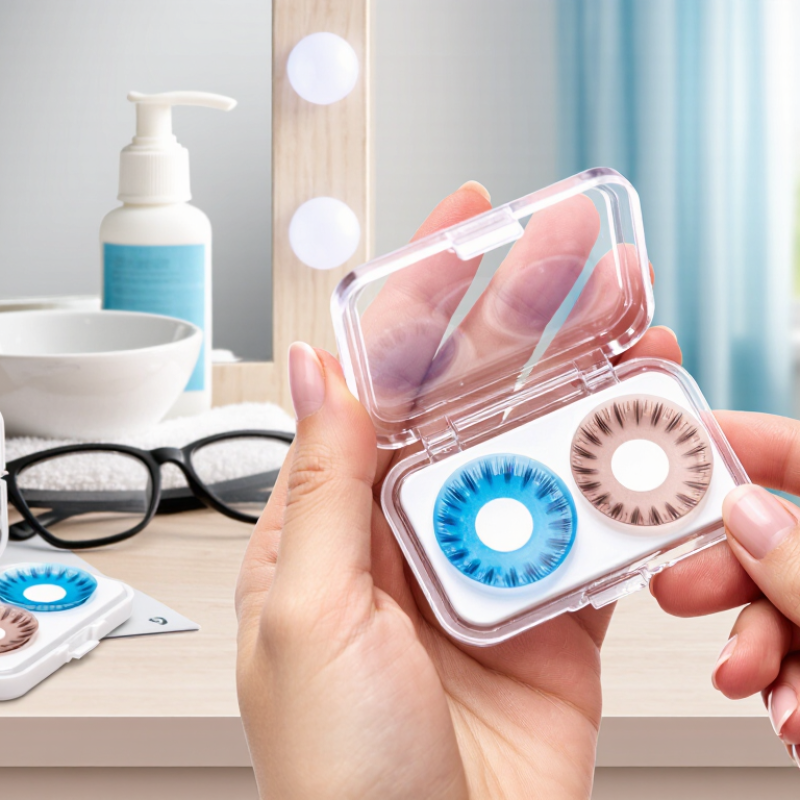
7 Tips for Buying Non Prescription Color Lenses

Confirm FDA Prescription Rules: Decorative Lenses Are Medical Devices

7 Tips for Buying Non Prescription Color Lenses

“Non prescription” does not mean unregulated. In the United States, the FDA classifies decorative contact lenses as medical devices, even when they contain no vision correction. Therefore, you need a valid prescription from an eye care professional before purchasing them. A proper eye exam checks your eye health, measurements, and lens fit. Fit matters. A lens that feels loose may move across the cornea, while a tight lens can reduce oxygen and cause irritation.

Do not trust a package that promises a perfect fit for everyone. Decorative lenses sold through informal websites, beauty shops, or social media may lack reliable quality controls. The FDA advises consumers to use authorized sellers and avoid lenses with unclear materials, missing instructions, or no prescription process. Check the packaging carefully. It should identify the product, manufacturer, and usage guidance. No power does not mean risk-free.

Handle color lenses like medical equipment. Wash and dry your hands before touching them, and never use tap water or saliva for cleaning. Do not share lenses, sleep in them, or wear them longer than recommended. If your eye becomes painful, red, unusually watery, or sensitive to light, remove the lens and contact an eye care professional promptly. I understand the temptation to focus on color and price, but that shortcut can hide important risks. Even careful shoppers can miss them.

Check Fit and Eye Health Before Purchase: CDC Counts 45 Million U.S. Wearers

Colored lenses may look like a simple cosmetic purchase, but they still sit directly on the eye. The CDC estimates that 45 million people in the United States wear contact lenses. That scale matters: a poor fit can irritate the cornea, even when a lens looks comfortable at first. A fitting by an eye-care professional checks factors such as corneal shape and lens movement. Ask whether the specific lenses you plan to buy have been assessed for your eyes. A flattering photo proves nothing about fit.

The CDC’s 2014 report in Morbidity and Mortality Weekly Report found that 99% of surveyed contact lens wearers reported at least one risky lens-care habit. This was a survey finding, not a claim that 99% developed an infection. Still, it is a useful warning. Before buying, arrange an eye exam, confirm the wearing schedule, and learn how to clean and store the lenses. Keep the care instructions nearby. If your eyes become red, painful, unusually light-sensitive, or blurry, remove the lenses and contact an eye-care professional promptly. It is easy to focus on color and forget comfort; that is a mistake worth catching early.

7 Tips for Buying Nonprescription Color Lenses

Check fit and eye health before purchase. “Nonprescription” color lenses still need a prescription and proper fitting.

U.S. contact lens wearers: The CDC estimates that 45 million people in the United States wear contact lenses. This figure covers contact lens wearers generally, not color-lens users specifically.

  1. Get an eye-care professional’s prescription and fitting, even for lenses used only for color.
  2. Buy lenses from a seller that requires a valid prescription.
  3. Follow the care and replacement instructions provided for your lenses.
  4. Wash and dry your hands before handling lenses.
  5. Never share or swap lenses.
  6. Remove lenses before sleeping unless your eye-care professional specifically says otherwise.
  7. Stop wearing lenses and seek professional advice if your eyes become painful, red, or irritated.

Sources: CDC, Contact Lenses; U.S. Food and Drug Administration, Decorative Contact Lenses.

Assess Material, Oxygen Permeability, and Brand Transparency

7 Tips for Buying Non Prescription Color Lenses

Non-prescription does not mean risk-free. A colored lens still rests directly on the cornea. Check the lens material and its oxygen permeability before admiring the shade. Higher oxygen transmission can support corneal comfort, especially during longer daytime wear. However, a high number does not guarantee a good fit. Diameter, base curve, thickness, and moisture balance also matter. Ask an eye-care professional to measure your eyes, even if you have clear vision.

Read the technical information carefully. Look for the material name, oxygen permeability data, water content, replacement schedule, and approved wearing time. A lens that feels soft may still become dry by late afternoon. I once focused too much on color and ignored edge comfort; that was a poor decision.

Remove lenses if your eyes become red, painful, unusually watery, or sensitive to light. Never sleep or swim in them unless a qualified professional specifically confirms that use is appropriate.

Brand transparency deserves equal attention. Reliable sellers should clearly identify the manufacturer, batch or lot number, expiry date, care instructions, and customer support contact. Packaging should be sealed and printed details should match the product inside. Be cautious when technical information is vague, translated poorly, or missing. Price alone proves little. A transparent company explains testing and reports problems honestly, although even clear information cannot replace professional fitting. My judgment can be wrong, so I would rather delay a purchase than trust attractive packaging alone.

Compare Seller Credentials, Packaging, and FDA-Required Product Details

7 Tips for Buying Non Prescription Color Lenses

Tip 1: Check the seller’s credentials before viewing colors. In the United States, cosmetic lenses still require a valid prescription. Choose a seller connected to a licensed eye-care professional. Tip 2: Look for a physical address, responsive customer service, and clear return policies. A polished website proves little. Tip 3: Be cautious when a seller avoids eye examinations or sells lenses without measurements.

Tip 4: Inspect the packaging when it arrives. It should be sealed, clean, and undamaged. Tip 5: Confirm the label shows the manufacturer, lens name, power, base curve, diameter, material, lot number, and expiration date. These details help match the product to your prescription and support traceability. Missing information is not a small printing error. Do not wear the lenses until it is clarified.

Tip 6: For products sold in the United States, check for required FDA-related labeling and legitimate distribution information. Rules differ elsewhere, so consult your local medical-device authority. Tip 7: Compare the package with the seller’s online description. The color may look different in photographs, and I have learned that attractive images can hide vague specifications. Never share lenses, sleep in them, or use tap water for cleaning. An eye exam remains useful, even when the lenses are described as non-prescription. Comfort is not proof of safety.

7 Tips for Buying Non-Prescription Color Lenses: Compare Seller Credentials, Packaging, and FDA-Required Product Details

Tip What to Check Safer Sign Warning Sign
1. Confirm a prescription is required In the United States, decorative and color contact lenses are medical devices, even when they have no vision-correction power. The seller requires a valid contact lens prescription and follows prescription-verification rules. The seller says you can buy lenses without a prescription or use another person’s prescription.
2. Check the seller’s credentials Look for clear contact information and a process for verifying your prescription with your eye-care professional. The seller identifies its business and explains how prescriptions are checked before lenses are supplied. The seller avoids prescription checks, provides no reliable contact details, or offers lenses through an informal marketplace listing.
3. Match the prescription to the lens Contact lens prescriptions can include power, base curve, diameter, brand or lens type, and other fitting details. The lens supplied matches the prescription and fitting details prescribed for your eyes. The seller suggests choosing a size or fit based only on appearance, or substituting a different lens without professional guidance.
4. Inspect the original packaging Check that each lens is in intact, sterile packaging and that the package identifies the lens and its manufacturer or distributor. Packaging is sealed, legible, and consistent across the box and individual lens containers. The seal is broken, the package is damaged, or the lenses arrive loose, repackaged, or in unmarked containers.
5. Read the product and traceability details Check the lens parameters and look for identifying details such as a lot or batch code and an expiration date where applicable. Product information is readable and lets you identify the specific lens and its production or expiration details. Key details are missing, obscured, inconsistent, or printed only on an unverifiable seller-made label.
6. Verify FDA status for the specific lens Check the exact lens type and intended use against FDA information. Contact lenses require the appropriate FDA marketing authorization; the regulatory pathway can vary. The seller provides enough identifying information to check the specific product’s FDA status. A vague “FDA registered” claim is presented as proof that a lens is FDA-authorized, or no product details are supplied to verify the claim.
7. Follow care instructions and stop if problems occur Use the prescribed wearing schedule and lens-care instructions. Do not share lenses or use water or saliva to clean them. The package includes clear use and care instructions, and you arrange professional advice if discomfort or vision changes occur. The seller recommends extended wear beyond the prescribed schedule or dismisses redness, pain, light sensitivity, or blurred vision.

Important: “Non-prescription” usually refers to lenses without vision-correction power; it does not mean they can be legally or safely bought without a prescription in the United States. Consult an eye-care professional for a fitting and prescription.

Follow CDC Care Guidance: Up to 90% of Wearers Mishandle Lenses

Colored lenses can change an eye’s appearance, but they still touch the cornea. Buy only lenses fitted for your eyes by an eye-care professional, even when you do not need vision correction. A proper fit matters. A lens that feels tight, shifts, or blurs vision is not a harmless fashion accessory. Do not share lenses, and do not use tap water to rinse or store them.

Care mistakes are common. A CDC report in the 2015 MMWR found that

99% of surveyed adult contact lens wearers reported at least one behavior linked with greater infection risk.

That figure does not mean 99% developed an infection, and it does not specifically measure decorative-lens users. Still, it shows why small routines deserve attention. Wash and dry your hands before handling lenses, use fresh contact-lens solution, and follow the prescribed replacement schedule. Never sleep, shower, or swim in lenses unless an eye-care professional has specifically advised otherwise.

Small habits matter. A missed rinse or an old case can seem trivial; it is worth reconsidering that assumption. If your eyes become red, painful, light-sensitive, or suddenly blurry, remove the lenses and contact an eye-care professional promptly.

FAQS

Do non-prescription colored lenses still require a prescription in the United States?

Yes. The FDA classifies decorative contact lenses as medical devices, even without vision correction.

Why should an eye-care professional check the fit?

An exam checks your eye health, measurements, and how the lens moves. Fit matters. A loose lens may shift across the cornea, while a tight one can irritate the eye.

Does a product photo show that lenses will fit?

No. A flattering photo proves nothing about fit. Ask whether the specific lenses have been assessed for your eyes.

What should I check before buying colored lenses?

Use an authorized seller and look for clear product details, usage guidance, and a prescription process. Be cautious when materials or instructions are unclear.

How should I handle and clean my lenses?

Wash and dry your hands before touching them. Never clean lenses with tap water or saliva. Keep the care instructions nearby.

Can I share lenses or sleep in them?

No. Do not share lenses or sleep in them. Follow the recommended wearing schedule, too.

What should I do if my eyes become irritated?

Remove the lenses if your eye becomes painful, red, unusually watery, light-sensitive, or blurry. Contact an eye-care professional promptly.

What do the CDC figures say about contact lens care?

The CDC estimates that 45 million people in the United States wear contact lenses. A 2014 survey found 99% of surveyed wearers reported at least one risky care habit. That did not mean 99% developed an infection. I might still focus on color first; that is worth reconsidering.

Conclusion

Non-Prescription Color Lenses may change your appearance, but they still need to be chosen with your eye health in mind. Decorative lenses are considered medical devices, so check the applicable FDA requirements and consult an eye care professional before buying. A proper fit matters: lenses that do not match your eyes can cause irritation or injury. With about 45 million lens wearers in the United States, careful selection and professional guidance are important for protecting your vision.

Before purchasing, review the lens material, oxygen permeability, seller credentials, packaging, and required product details. Choose lenses with clear information about their specifications and intended use, and avoid products with incomplete or questionable labeling. Follow care instructions closely, including washing and drying your hands, using recommended cleaning solutions, and never sharing lenses. The CDC reports that many wearers mishandle their lenses, so consistent hygiene and safe storage are essential. Remove lenses if your eyes become uncomfortable, and seek professional advice if symptoms persist.

Aria

Aria

Aria is a dedicated marketing professional with a deep passion for innovative strategies and a keen understanding of our company's product offerings. With a wealth of experience in the industry, Aria excels at crafting engaging content that highlights the unique features and benefits of our......