Finding China’s best supplier requires more than comparing color charts or factory photos. Custom Color Contact Lenses must combine visual appeal, stable quality, and documented safety controls. A reliable supplier should explain materials, water content, diameter, base curve, and production tolerances clearly. These details affect comfort, fit, and everyday wear.
Practical experience matters during evaluation. Ask for samples before approving a large order. Check color consistency under daylight, indoor lighting, and camera flash. Inspect the lens edge, packaging seal, print quality, and solution clarity. A serious manufacturer should provide traceable batch information and suitable quality documentation. Depending on the destination market, this may include ISO 13485 certification, test reports, labeling support, and regulatory guidance. Independent verification remains important.
A polished website proves little. Real evidence matters.
The best supplier is not always the cheapest factory. It should communicate quickly, answer technical questions, and identify limitations honestly. Confirm minimum order quantities, sampling fees, lead times, customization options, and after-sales procedures. Ask how rejected lenses are handled and whether production records can be reviewed. Some suppliers promise everything too easily. That should invite careful questions.
This overview will compare supplier capabilities, compliance awareness, customization quality, and service reliability. It will also consider what buyers often miss, including fitting responsibility and market-specific requirements. No supplier is perfect. A thoughtful decision balances attractive design with measurable performance, transparent communication, and documented consumer protection.
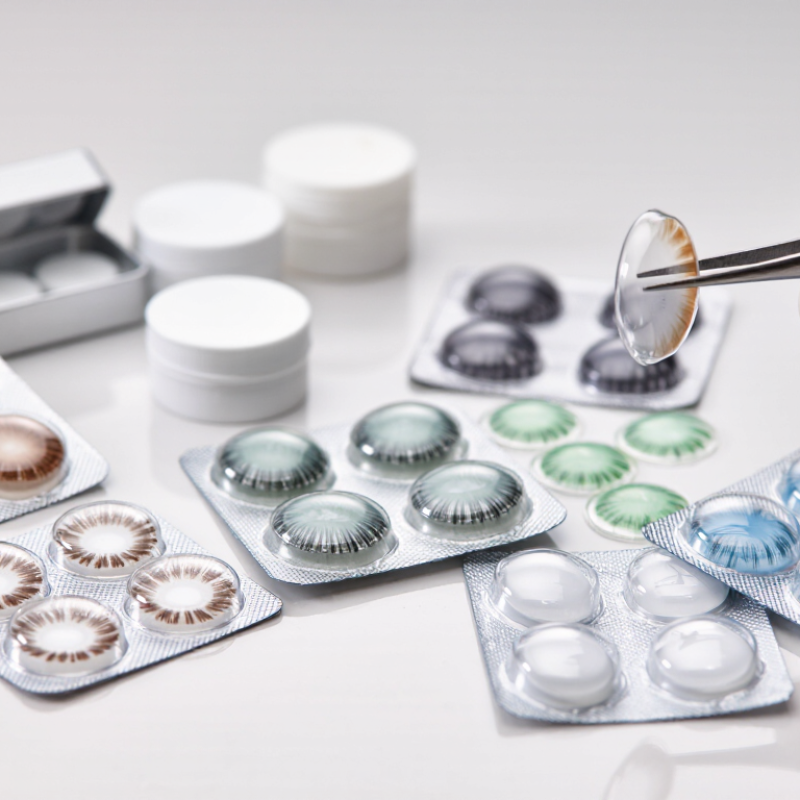
A reliable custom color contact lens supplier in China should offer more than attractive sample photos. The real test begins with material safety, optical accuracy, and consistent production records. Experienced suppliers can explain water content, oxygen permeability, base curve, diameter, and pigment placement in clear language. They should also confirm whether products require vision correction or are cosmetic only.
Ask for documented quality procedures and traceability. Each production batch should connect to material records, inspection results, and packaging details. Independent testing may verify sterility, prescription accuracy, and biological safety. A responsible supplier should understand the destination market’s medical-device requirements and provide suitable technical documents. Never rely on certificates without checking their scope, validity, and issuing authority.
Communication reveals practical experience. Can the supplier discuss color matching under daylight, indoor light, and digital photography? Can they send physical samples before larger production? A careful factory will explain limitations, such as small color differences between batches or changes caused by lens curvature. No factory is flawless. That is why corrective-action records matter. I would also inspect response times, packaging control, and complaint handling before making a decision. Low prices can look impressive, but weak traceability may create expensive problems later. A dependable partner shares evidence, accepts reasonable questions, and avoids promises that production cannot consistently support.
China Best Custom Color Contact Lenses Supplier?
Color contact lenses now serve fashion, photography, cosplay, and vision correction needs. Product selection should begin with lens function, not only appearance. Common types include daily disposable, monthly replacement, prescription, and plano lenses. Daily lenses offer simpler hygiene routines. Monthly lenses may reduce unit costs, but they demand stricter cleaning and storage.
Grand View Research estimated the global contact lens market at about USD 9.5 billion in 2023. Its report also projects continued growth through 2030, supported by cosmetic demand and vision correction. This growth creates more supplier choices, but quality differences remain significant. A capable Chinese supplier should provide stable base curves, diameter options, and prescription ranges. Customization can include iris patterns, limbal rings, opacity levels, color matching, packaging, and private-label artwork. Digital proofing helps, although printed samples can look different on real eyes. That gap deserves honest discussion.
Tips: Ask for material specifications, oxygen permeability, water content, and replacement guidance. Request batch records, sample inspection reports, and quality-control procedures. Confirm whether lenses are classified as medical devices in the target market. Fit matters. An attractive design can still feel dry, move excessively, or reduce visual clarity. Suppliers should support professional fitting and provide traceable documentation. Do not judge reliability from color samples alone. Test comfort, consistency, and print alignment across multiple production batches.
Replacement schedules are a key product classification when selecting custom color contact lenses. The chart shows the nominal replacement interval commonly associated with each lens type. Actual availability depends on prescription, lens material, regulatory approval, and supplier capabilities.
Customization options may include prescription power, base curve, lens diameter, tint intensity, enhancement or opaque tint design, limbal-ring effects, printed patterns, and replacement schedule. All color contact lenses should be properly fitted and used according to eye-care professional and manufacturer instructions.
Choosing a reliable custom color contact lens supplier requires more than attractive sample photos. Manufacturing standards should be documented, traceable, and consistently applied across every production batch. A capable supplier should explain its material sources, production controls, and testing records clearly.
Common lens materials include hydrogel and silicone hydrogel. Each affects water content, oxygen transmission, flexibility, and wearing comfort. Color pigments should remain securely embedded within the lens structure, not sit loosely on the surface. The lens edge also needs a smooth finish. Small defects can cause noticeable discomfort.
Quality control begins with incoming material inspection. Technicians should check lens diameter, base curve, power, color consistency, and surface clarity. Batch numbers must connect raw materials to finished products. Sampling under controlled lighting can reveal uneven pigment patterns that ordinary inspection misses. Sterility testing and packaging checks may also be required, depending on the product and market.
Ask for independent test reports.
Real production experience shows that visual approval alone is not enough. A lens can look perfect in a sample box but perform differently after scale-up. Suppliers should validate pilot batches before mass production and keep records of corrective actions. No factory is perfect. What matters is whether problems are detected, reported, and corrected honestly. I would also request retained samples, because color and material performance can change over time. Reliability comes from repeatable evidence, not confident promises.
Choosing a China best custom color contact lenses supplier requires more than comparing prices. Check whether the factory operates under a documented quality management system, such as ISO 13485. Ask for the certificate number, issuing body, scope, and expiration date. A certificate alone proves little if it excludes contact lenses or the actual manufacturing site.
Request batch-level evidence. This should include material specifications, oxygen permeability, base curve, diameter, pigment placement, sterility controls, and biocompatibility testing. Review test reports from independent laboratories, not only internal spreadsheets. In the United States, contact lenses are regulated medical devices, including cosmetic lenses without vision correction. Other markets may require separate registrations, labeling, or conformity assessments. Requirements vary.
Safety failures are often behavioral, but suppliers still influence risk. The CDC reported that 99% of surveyed contact lens wearers reported at least one risky habit in an MMWR study. The agency also estimates that about 45 million Americans wear contact lenses. These figures make traceability and clear instructions commercially important. Check whether each package carries a lot number, expiry date, wearing schedule, cleaning guidance, and complaint contact. Inspect sample lenses under magnification for uneven color edges, trapped particles, or rough rims. Small defects matter.
Ask how the supplier investigates complaints and recalls affected batches. Review audit records, corrective-action reports, and retention-sample procedures. I would not rely on polished factory photos. They are easy to stage. A video call into production helps, but it is not a full audit. The uncomfortable question remains: can the supplier prove consistent safety when nobody is watching?
| Evaluation Dimension | What to Verify | Reliable Evidence | Recommended Acceptance Benchmark | Risk if Missing |
|---|---|---|---|---|
| Quality Management System | Whether the manufacturing site operates a controlled medical-device quality system. | A current ISO 13485 certificate issued by an accredited certification body, with the correct legal entity, site address, and scope. | Certificate is current, site-specific, and covers the manufacture or processing of contact lenses or relevant ophthalmic devices. | Uncontrolled production, incomplete records, and inconsistent product quality. |
| Regulatory Authorization | Whether the product is legally marketable in the intended destination country. | Applicable regulatory approval, registration, conformity assessment, or market authorization; verify directly through the relevant government or notified-body database where available. | Documentation matches the exact product, manufacturer, intended use, market, and packaging configuration. | Custom lenses may be delayed, rejected, recalled, or prohibited from sale. |
| Certification Authenticity | Whether certificates are genuine and remain valid. | Certificate number, issue and expiry dates, certification scope, accreditation details, and independent verification with the issuing organization. | No altered PDFs, expired certificates, mismatched addresses, or certificates issued only to an unrelated trading company. | False compliance claims and inability to prove legal supply-chain responsibility. |
| Material Safety | Composition and biocompatibility of the lens polymer, pigments, coatings, and packaging materials. | Material specifications, supplier declarations, batch records, and biocompatibility test reports based on the applicable ISO 10993 evaluation process. | Materials are fully identified, traceable, suitable for ocular exposure, and supported by testing from competent laboratories. | Irritation, allergic reactions, toxicity, pigment migration, or corneal injury. |
| Colorant and Printing Safety | Whether the color pattern is isolated from direct contact with the eye and remains stable during use. | Colorant specifications, migration or extractables testing, abrasion testing, microscopy, and accelerated stability data. | No visible pigment release, cracking, delamination, or unacceptable color transfer under defined test conditions. | Pigment exposure, visual discomfort, inflammation, or product appearance changes. |
| Optical and Dimensional Control | Whether power, base curve, diameter, center thickness, and cosmetic parameters meet specifications. | Validated inspection methods, calibration records, in-process measurements, and batch release reports. | Every batch meets approved tolerances and the supplier can provide representative inspection data for custom parameters. | Blurred vision, poor fit, discomfort, and high return or complaint rates. |
| Oxygen Permeability and Wear Performance | Whether the lens material and design support the stated wearing schedule. | Test reports for oxygen permeability or transmissibility, water content where relevant, and design validation for the intended wear period. | Performance data supports the exact material, design, wearing schedule, and regulatory claims. | Corneal hypoxia, dryness, redness, discomfort, or unsafe use claims. |
| Sterilization and Microbiological Safety | Whether finished lenses are sterile and remain sterile throughout the labeled shelf life. | Sterilization validation, routine monitoring records, bioburden and sterility testing, packaging integrity testing, and environmental-control records. | Validated sterilization process, intact primary packaging, and documented release criteria for every production batch. | Serious eye infection, contamination, product recall, or shipment rejection. |
| Packaging and Shelf Life | Whether packaging protects the lens and supports the claimed expiry period. | Packaging specifications, seal-strength results, transport simulation, accelerated aging, real-time stability, and label-control records. | Shelf life is supported by documented stability evidence and packaging remains sealed after transport testing. | Loss of sterility, solution leakage, damaged lenses, or inaccurate expiry dates. |
| Labeling and Instructions for Use | Whether labels provide legally required information and safe-use instructions. | Approved artwork, instructions for use, warnings, storage conditions, lot number, expiry date, parameters, manufacturer details, and local-language review. | Labels are consistent with the regulatory market, product authorization, and actual specifications. | Misuse, customs issues, regulatory non-compliance, and preventable eye injuries. |
| Traceability and Batch Records | Whether raw materials and finished products can be traced from production to shipment. | Unique lot numbers, raw-material records, production history, inspection results, release authorization, and shipment records. | Supplier can identify affected lots quickly and retain records for the period required by applicable regulations. | Slow or ineffective recalls and inability to investigate complaints. |
| Custom Design Validation | Whether custom powers, patterns, diameters, and packaging changes are formally reviewed before production. | Approved design specifications, risk analysis, sample approval records, verification results, and change-control documentation. | No production change is made without documented review, approval, and assessment of regulatory impact. | Unapproved design changes, inconsistent fit, and invalidated regulatory claims. |
| Supplier and Subcontractor Control | Whether critical materials, sterilization, testing, or packaging are outsourced under control. | Approved supplier list, qualification audits, quality agreements, incoming inspection, and subcontractor certificates. | Critical outsourced processes are documented, monitored, and included in the quality-management system. | Hidden process variation and unclear responsibility for defects. |
| Complaint Handling and Recall Readiness | Whether safety complaints are investigated and reportable incidents are escalated. | Written complaint procedure, corrective and preventive action records, adverse-event process, mock recall results, and response-time targets. | Documented investigation, root-cause analysis, corrective action, trend monitoring, and traceable recall capability. | Repeated defects, delayed safety action, and increased regulatory exposure. |
| Independent Testing and Audit Access | Whether critical claims and processes can be independently assessed. | Reports from competent laboratories, remote or on-site audit arrangements, corrective-action responses, and production samples linked to test reports. | Supplier accepts reasonable due diligence and provides reports that identify methods, samples, dates, and acceptance criteria. | Unverified claims and limited visibility into actual manufacturing controls. |
Note: Regulatory requirements vary by destination market and product intended use. Certificates and authorizations should be verified against the exact manufacturing site, product configuration, and applicable authority.
Choosing a China-based custom color contact lens supplier requires more than comparing catalog prices. Grand View Research estimated the global contact lens market at about USD 18.6 billion in 2023, with continued growth through 2030. That growth attracts capable factories, but also inconsistent suppliers. Request product samples, material specifications, power ranges, diameter, base curve, and packaging details before placing an order. A reliable supplier should explain its sampling timeline, minimum order quantity, production schedule, and quality inspection process clearly.
Pricing usually depends on lens material, customization complexity, order volume, packaging, testing, and shipping terms. Printed patterns and unusual color matching may increase sampling costs. Ask for a complete quotation, including mold fees, revisions, inspection, freight, and replacement policies. A surprisingly low price may exclude important controls. In the United States, cosmetic lenses are regulated medical devices and require a prescription; other markets have different requirements. Check local rules, labeling duties, import documents, and applicable standards before payment. I would not trust verbal compliance promises alone.
Tips: Use a written purchase specification. Ask for batch records and test reports. Confirm who pays for defective units. Discuss support after delivery, including reorders, color consistency, complaint handling, and technical responses. ISO 13485 certification can indicate a structured quality system, but it does not replace independent verification. Grand View Research’s 2024 market analysis also highlights rising demand for specialized lens products, making long-term capacity and stable color reproduction worth checking early. Supplier support is often tested after the first shipment.
Common materials include hydrogel and silicone hydrogel. Each affects water content, oxygen transmission, flexibility, and wearing comfort.
Pigments should remain securely embedded within the lens structure. They should not sit loosely on the surface. Small defects matter.
Inspectors should check diameter, base curve, power, color consistency, and surface clarity. Controlled lighting can reveal uneven pigment patterns.
Each batch should connect raw materials with finished lenses. Records should include lot numbers, test results, and retained samples.
Request material specifications, oxygen transmission data, sterility controls, and biocompatibility reports. Independent laboratory reports are more useful than internal spreadsheets.
Not by itself. Check the certificate’s scope, issuing body, expiration date, and actual manufacturing site. Promises are not proof.
The supplier should validate pilot batches before scaling up. Compare color, material performance, packaging, and inspection records carefully.
Packaging should show the lot number, expiry date, wearing schedule, cleaning guidance, and complaint contact. Requirements vary by market.
Request a complete quotation covering samples, mold fees, revisions, testing, inspection, freight, and replacements. A very low price may omit important controls.
Discuss reorders, color consistency, defective-unit responsibility, complaint handling, and technical responses. Support is tested after delivery. I would still verify everything.
Choosing a reliable China-based supplier for Custom Color Contact Lenses requires careful evaluation of product quality, customization capabilities, and professional service. A dependable supplier should offer various lens types, colors, patterns, prescriptions, and packaging options while supporting clear communication and flexible order quantities. Their manufacturing process should use suitable, eye-safe materials, controlled production environments, and consistent quality inspections to help ensure comfort, durability, color accuracy, and product consistency.
Buyers should review relevant certifications, safety documentation, testing procedures, and compliance practices before placing an order. The ordering process should clearly explain sample development, customization approval, production timelines, shipping arrangements, and pricing factors such as materials, design complexity, packaging, and order volume. Long-term supplier support is also important, including responsive communication, quality feedback, transparent issue resolution, and stable production capacity. By assessing these areas carefully, buyers can select a responsible supplier that meets their quality expectations and supports sustainable business cooperation.

Dewylenses